




Is Our Father objective ?
Father Michel Remaud of the Jerusalem kehilla, director of the Christian Institute for Jewish Studies and Hebrew Literature, reflects on Jesus’ teaching in the parable of the Prodigal Son.
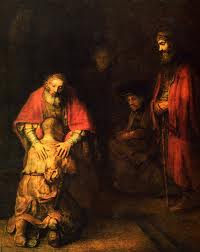
In chapter 15 of the Gospel according to Saint Luke, the well known parable of the prodigal son renders the same event according to three different versions within a few verses.
Version A, that of the servant: “Your brother has come, and your father has killed the fatted calf, because he has got him back safe and sound” (Luke 15:27).
Version B, that of the older son: “When this son of yours came back, who has devoured your property with prostitutes, you killed the fatted calf for him” (Luke 15:30).
Version C, that of the father: “This brother of yours was dead and has come to life; he was lost and has been found” (Luke 15:32).
If one looks for an objective narrative of the event, one needs to exclude from consideration the second and the third versions, both are strongly biased – especially the third one – because emotions are evidently mixed into the account of the facts and their interpretation. The neutral version is that of the servant, apparently detached from the story in which he has no part.
However, can one conclude then that the father is not objective? Should one say that he is blinded by his emotions to the point that reality has become invisible? Rather, might it not be correct to state that he is the only one who is objective because his vantage point is the only one that penetrates that which is invisible to the eyes: the man before him, who has returned from far away, is a son, his son, and it is this state of being a son that is the deepest reality of his being.
“We are God's children now; what we will be has not yet been revealed. What we do know is this: when he is revealed, we will be like him, for we will see him as he is” (1 John 3:2).
 Message of Epiphany: The Light Will Conquer the Darkness
 Fr. Benedetto: With Jesus in the wilderness during Lent
 Fr. Benny towards Lent
 Psalm for Lent
 Reflecting on Purim and on Lent
 Rosh HaShana – the Feast of God the Father